Why a Tree-Lined Street Can Feel Less Rushed
A tree-lined street can soften the pace of a walk through shade, visual rhythm, and a feeling of enclosure—without making every route comfortable for everyone.
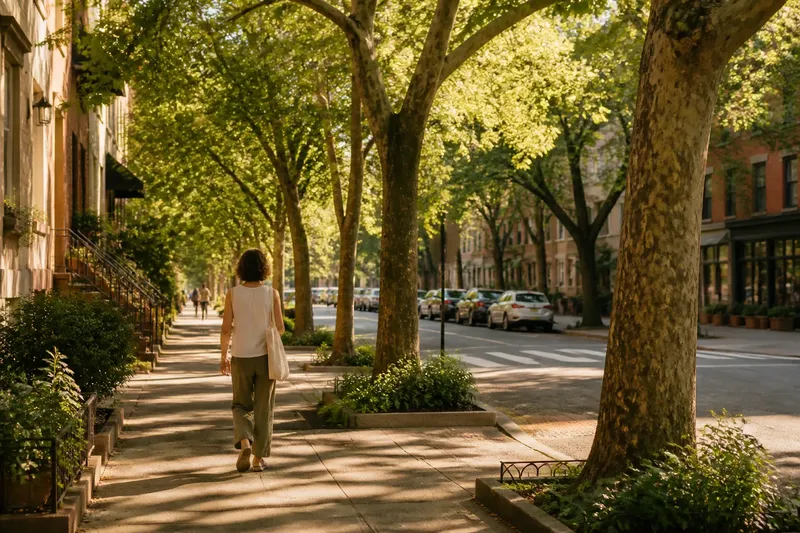
On a sunny block, a walker shifts a tote from one shoulder and steps around a bright patch of pavement. A few yards later, branches filter the light, and the walk feels easier to settle into. A tree-lined street can feel less rushed not because trees slow the clock, but because they change what the body and eye have to manage along the way.
Why can a tree-lined street feel less rushed?
A tree-lined street can feel less rushed because shade, repeated forms, and a clearer sense of space may make walking feel more continuous. The effect is not simply “more greenery equals more comfort.” It depends on the street’s shape, the weather, the activity around it, and what a particular walker needs.
On an exposed block, attention may keep jumping between glare, passing vehicles, storefronts, and gaps in the sidewalk. A row of trees can give the eye a more regular sequence to follow. Trunks, branches, and patches of shade repeat as the walker moves, lending the street a readable rhythm rather than a series of unrelated visual demands.
That rhythm can make a route seem less abrupt. The pace itself need not change; the experience of each stretch may feel more connected. Someone hurrying to catch a bus could still move quickly, while noticing that the block offers a more consistent visual path.
How does shade change the experience of walking?
Shade reduces direct exposure to strong sun, which can make a walk feel less taxing on a bright day. It also breaks the sidewalk into changing areas of light and shelter. A person can move from sun to shade without stopping, and that variation may make the route feel less stark than a long, fully exposed stretch.
The usefulness of shade shifts with conditions. On a warm afternoon, it may offer relief. On a cool, damp day, the same covered patch may feel chilly or dim. A person carrying groceries, pushing a stroller, or walking with a mobility aid may also need to choose the clearest, driest part of the sidewalk, not the shadiest one.
Shade is not only a question of comfort. It can affect visibility. Dense foliage, deep shadows, and poorly lit sections may make it harder to see uneven pavement, curb edges, or approaching people. A route that feels pleasantly sheltered to one walker may feel obscure to another, especially near an entrance or crossing.
What does visual rhythm do for a street?
Visual rhythm comes from recurring elements that give the eye a pattern: trees spaced along a curb, alternating light and shadow, or a steady line of trunks beside building fronts. The pattern can help a walker anticipate what comes next. That sense of continuity may make the route feel less like a sequence of interruptions.
The rhythm need not be perfectly regular. A gap where a driveway crosses the sidewalk, a broad tree canopy, or a bench beneath a trunk can create a pause in the pattern. Such breaks may make the street feel more legible, as long as they do not block the walking path or conceal hazards.
Imagine a person walking to a corner store along a block with bright sun and a line of parked cars. They choose a parallel street where trees cast alternating patches of shade and leave the curb ramps visible. The expected observable result is not a measured change in pace; it is a walk with less glare and a clearer sequence of landmarks. If a branch obscures a signal or the sidewalk narrows, the person may prefer the original route instead.
When does a tree canopy create a sense of enclosure?
A canopy can make a street feel more contained when branches, building fronts, and the sidewalk edge form a gentle boundary around the walking space. That sense of enclosure may help a route feel coherent: the walker is moving along a defined corridor rather than across an open, exposed strip.
Enclosure is a matter of degree and perspective. A broad street with tall trees may still feel open, while a narrow street with low branches can feel close overhead. Some people find a sheltered edge reassuring; others may feel boxed in, particularly where sightlines are short, buildings have blank walls, or there are few ways to leave the sidewalk.
The setting around the trees matters as much as the canopy. A lively storefront, a visible side street, or windows facing the sidewalk can make a contained route feel occupied. A dim stretch with obstructed views can produce a different impression. Tree cover alone cannot tell a walker whether a block will feel welcoming.
Does a tree-lined street feel comfortable for everyone?
No. Comfort depends on a person’s sensory needs, mobility, purpose, and the conditions on that street. One walker may welcome filtered light and a quieter visual field. Another may want open sky, bright visibility, fewer branches overhead, or a direct route to a crossing.
Leaves and roots can also affect the walking surface. Low branches may interfere with head clearance, while fallen leaves can obscure cracks or make a damp sidewalk slippery. Tree pits, street furniture, and narrow passages may leave less room for people using wheelchairs, walkers, or strollers. The presence of trees does not by itself make a route accessible or pleasant.
Noise and activity complicate the picture, too. A tree-lined avenue may still carry heavy traffic, while a bare street may have wide sidewalks and clear sightlines. If quiet is not comfortable for you, or if a sheltered path feels too enclosed, there is no need to treat the greener route as the better one.
How can you tell whether a tree-lined route suits you?
Look at the route as a whole rather than choosing by tree cover alone. Notice where the sidewalk narrows, where crossings are visible, and whether shade falls across the path or only over the roadway. Consider the time of day and the weather you are walking in.
- Check the walking surface. Look for lifted pavement, wet leaves, root bumps, and clear curb ramps; choose another side of the street if the path is difficult to follow.
- Notice the light. See whether the shade helps with glare or instead makes entrances and pavement harder to read.
- Watch the sightlines. Check whether you can see a crossing, the next block, and people approaching from entrances or side streets.
- Consider the width. Notice whether branches, poles, bins, or tree pits leave enough room for your usual walking pace and any mobility equipment.
- Pay attention to your own response. If the route feels crowded, dim, exposed, or too enclosed, use a nearby alternative that better fits your needs.
These observations are useful on a familiar block as well as a new one. A route can feel different when the sun shifts, rain falls, or a sidewalk becomes busy. The point is not to assign a permanent label to the street, but to notice which conditions make it workable for you on that walk.
What do walkers often ask about tree-lined streets?
Are tree-lined streets always cooler?
No. Tree cover can provide shade, but the feel of a street also depends on its exposure, paving, buildings, and weather. A shaded sidewalk may feel cooler than the opposite side, yet still be uncomfortable for someone who prefers direct sun or needs a brighter walking surface.
Can trees make a street feel safer?
They may make a route feel more contained or more pleasant for some walkers, but trees do not determine safety by themselves. Clear sightlines, visible entrances, usable sidewalks, and comfortable crossings also shape how a person experiences the block.
Is a tree-lined route better for a short walk?
It depends on the purpose and conditions. A shaded, legible block may suit an unhurried walk on a bright day, while a direct, open route may be preferable when visibility or a clear crossing matters more.
What if the trees make the sidewalk harder to use?
Choose a path with clearer pavement and enough room, even if it has less shade. If branches, roots, or street furniture obstruct the route, the canopy’s visual comfort does not outweigh the practical difficulty.
How should you choose between a shaded and an open block?
Choose by the conditions you can observe and the way you want the walk to feel. A tree-lined street may offer filtered light, repeated landmarks, and a more defined edge. An open block may offer clearer views, more direct sunlight, or a wider passage. Neither quality is automatically superior.
For a route you use often, it can help to keep two options in mind: one with shade for bright weather and another with better visibility or pavement when conditions change. A tree-lined street can feel less rushed when its canopy gives the walk a steady, comfortable shape. The most useful question is whether that shape works for you on this particular trip.