From Public Garden to City Park: How Access Changed the Purpose of Urban Green Space
Public garden to city park history reveals how ideas about access and use took shape, helping you choose a green space suited to the visit you want.
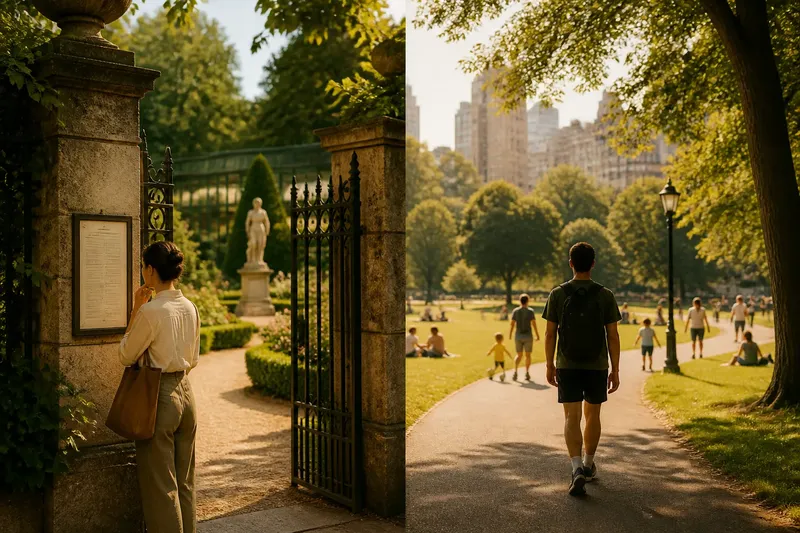
At a garden gate, a visitor pauses to read the posted hours before choosing a path. A few blocks away, someone crosses a city park without looking for an entrance at all. The contrast offers a useful way into public garden to city park history, though it does not describe a single, universal change. Gardens and parks took different forms across places and periods, and both could mix welcome with restriction.
The distinction is less a clean sequence than a change in emphasis. Some landscaped grounds admitted visitors under rules set by their keepers; urban parks were often presented as places for broader recreation and everyday use. Looking at the difference can help explain why one green space feels composed and another leaves more room for a visit to unfold.
What did “public” mean in an early garden?
Landscaped grounds could belong to estates, institutions, or civic authorities. Some admitted visitors, but public access did not always mean equal or unrestricted access. Permission, fees, visiting hours, dress expectations, and codes of conduct could shape who entered and what they did there.
The design often made the terms of a visit visible. A gate marked the threshold. Gravel paths directed people through composed views; clipped hedges, flower beds, statues, and water features presented cultivation for close attention. Visitors were generally invited to look and stroll, rather than to run, play a game, or spread out a meal.
That did not make such gardens joyless or without public value. They could offer beauty and respite. Their limits lay in the kinds of activity they encouraged: a garden might welcome visitors as spectators while discouraging noise or uses that disrupted its planting and display.
Why did parks make a different civic promise?
In many urban settings, advocates and planners came to describe shared open space as a place for recreation as well as scenery. Parks could provide room to walk, meet, sit, and play beyond private grounds or paved streets. The change was not uniform, and it did not replace gardens everywhere; it broadened the purposes that a civic green space might claim to serve.
That broader purpose could shape the layout. Open lawns, connected paths, playgrounds, sports grounds, and gathering areas allowed for more than quiet observation. Visitors could arrive for different reasons, and their plans might change once they were inside.
Yet the word “public” did not erase practical barriers. Location, transport, rules, upkeep, and social conditions affected who could use a park comfortably. The important distinction is one of stated purpose: recreation and ordinary access became central expectations in many park designs, rather than incidental benefits of a cultivated landscape.
How can you choose between a garden and a park?
Start with the kind of visit you have in mind. A formal garden and a city park can both be open to visitors, but their layouts and rules may invite different rhythms. Check the posted guidance and choose the place that fits your route and plans.
- If you want a quiet, composed visit, check for ordered beds, framed views, and marked paths; if those are present, choose the garden for slow looking, but choose a quieter park corner if you want more freedom to change direction.
- If you need room to move or linger, check for open lawns and connected paths; if they are available and permitted for your intended use, choose the park, but use a nearby garden path if the park’s active areas feel too busy.
- If you are visiting with children or a group, check the map for a playground, field, or picnic area; if the activities you need are provided, choose that park, but select a garden or another quiet space if the group plans to focus on looking and talking.
- If time is limited, check the nearest entrance and the layout before setting out; if a small garden sits directly on your route, choose it for a contained pause, but choose a park when you have time for a walk without a fixed endpoint.
- If you want a quieter visit in a busy district, check signs and the position of active areas; if a garden or park edge is separated from play and sport, choose that area, but move to a designated quieter zone if the first spot is noisy.
- If you want to bring food or play a game, check posted rules and signs; if the activity is allowed in a designated area, use that area, but choose another permitted place if the garden or park restricts it.
Say you have an open hour before meeting a friend and want to talk without competing with a game. First, check the maps and signs for both nearby spaces. If the garden lists benches along a quieter path and the park map shows sport beside its main lawn, choose the garden and agree to meet at its entrance. The expected result is a conversation away from the game; if the garden is closed or its rules do not suit your plan, choose a quieter park path instead.
How do rules and design shape access today?
Access means more than an unlocked gate. Confusing paths, scarce seating, remote entrances, or unclear signs can make an open space difficult to use. A park may offer many activities yet leave visitors uncertain about where they belong.
Look for cues that make the space legible. Clear signs, visible paths, benches near routes, and distinct activity zones can help people share a place without expecting everyone to do the same thing. A formal garden may protect delicate planting with railings or designated paths; a park may set aside space for sport while keeping quieter corners.
Rules are part of how a shared place is cared for. They can protect plants and reduce conflicts, while also defining which activities are welcome. Follow the site’s posted instructions rather than assuming that every garden or park permits the same uses.
What do visitors often ask about public gardens and parks?
Is a public garden the same as a city park?
Not necessarily. A public garden often emphasizes cultivated planting and a more directed visit, while a city park commonly accommodates a broader mix of recreation and everyday use. The terms can overlap, so the site’s layout and rules matter more than its name.
Were early public gardens open to everyone?
Some admitted visitors, but entry could depend on fees, schedules, permission, or social expectations. The word “public” did not always mean unrestricted access.
Why do some parks still feel formal?
A park may retain designed views, memorials, carefully managed planting, or rules that favor quiet behavior. Its character can also change from one area to another, with active recreation beside more formal spaces.
How can I tell what a green space supports?
Notice its paths, signs, seating, activity areas, and posted rules. A map may clarify intended uses, while the layout can suggest whether the site favors strolling, play, gathering, or quiet observation.
What does public garden to city park history clarify?
The change did not erase the value of cultivated beauty. It widened the purposes that urban green space could serve: visitors might come to look, rest, move, meet, or take part in public life. Many places still hold both ideas, sometimes in separate areas and sometimes along the same path.
Public garden to city park history is most useful as a way to read a place, not as a simple story in which one kind of space replaced another. A garden may invite attention to designed details; a park may leave room for a visit to change shape. Before choosing, check the entrance, map, and rules. Those small details often reveal which invitation the space is actually able to offer.