A Neighbourhood Walk for Noticing Light
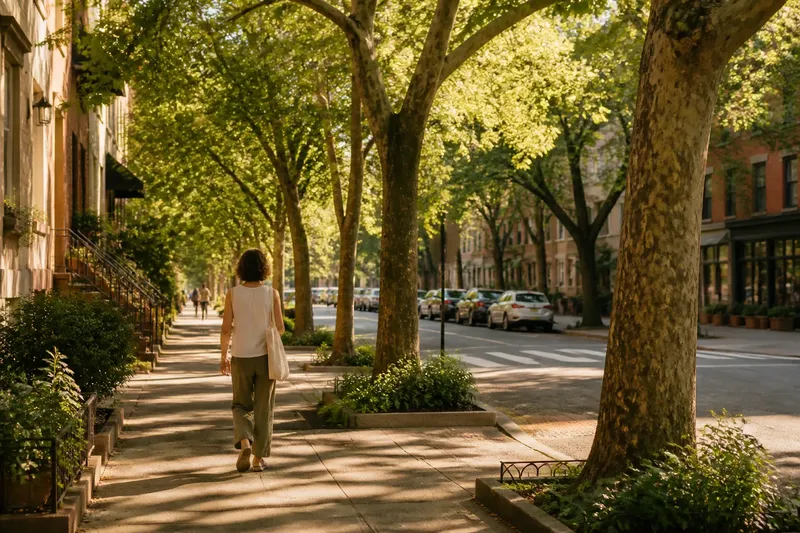
A neighbourhood walk for noticing light can make a familiar outing more attentive, with a simple route plan that adapts to weather, comfort, and street conditions.
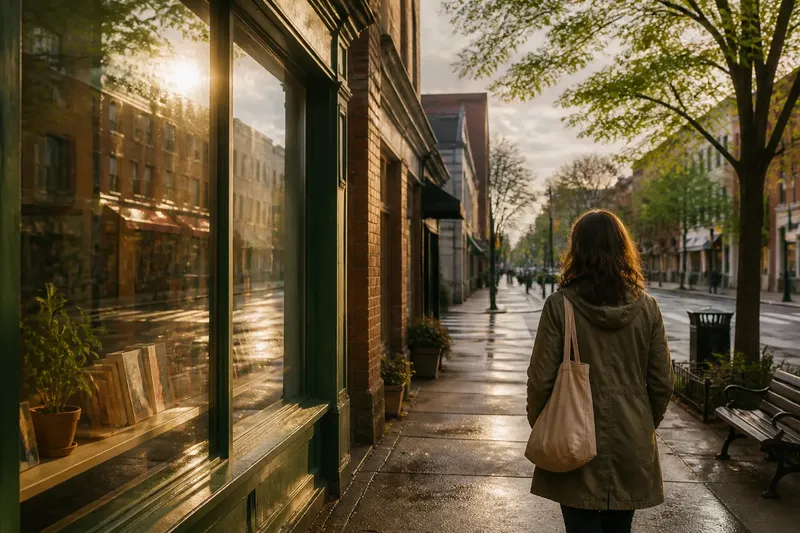
You leave the library after an errand and notice a bright reflection on a nearby window. A neighbourhood walk for noticing light can begin with that small detail, then continue along streets you already know. The aim is not to find perfect sunshine. It is to give ordinary surfaces a little more attention.
Choose a starting point with a few safe ways to continue or turn back. Then follow what you can see from the sidewalk: a window reflection, a bright doorway, or a change in tone between open and enclosed streets. The route can remain familiar while your attention shifts.
How do you plan a neighbourhood walk for noticing light?
Use a map only to identify convenient public streets, crossings, and a comfortable place to stop. A map cannot predict exactly how light will look between buildings, and there is no need to build a route around a promised visual effect.
Before leaving, choose one simple prompt and one easy way to end the walk. For example, you might look for differences between glass, brick, and painted walls, then finish near a transit stop or familiar corner. Keep the route flexible if a sidewalk is crowded, closed, or uncomfortable.
- Check the starting point. If it connects to more than one familiar street, choose the quieter one; if both options feel busy, begin somewhere calmer.
- Check the sidewalk. If it is clear and comfortable, continue at an easy pace; if it is blocked or crowded, use a nearby accessible public route instead.
- Check the sky. If clouds soften the scene, notice broad changes in brightness; if direct glare feels uncomfortable, turn away from reflective surfaces or choose a shaded public sidewalk.
- Check the crossing. If the signal and traffic conditions are clear, cross attentively; if not, wait for a safe signal or choose another crossing.
- Check the stopping place. If a bench, plaza, or library forecourt is open and comfortable, pause there; if it feels crowded or exposed, keep walking to a more suitable public spot.
- Check your return option. If a familiar street or transit stop remains convenient, use it when you are ready to finish; if not, turn toward a nearer safe route back.
What can you notice without seeking a particular scene?
Start with surfaces rather than the sky. A pale wall may hold a soft glow while a nearby brick facade looks muted. Glass can reflect a bright patch from across the street, and a metal sign may catch attention briefly as you pass.
Clouds, building shapes, and the direction of the street all affect what is visible. Instead of trying to predict a result, notice the scene you have. On a cloudy day, compare the brightness of an open intersection with a covered entrance. In stronger sun, look at a wall or pavement from a comfortable angle rather than facing the glare.
Imagine you leave a neighborhood bookstore on an overcast afternoon and have twenty minutes before meeting a friend. You choose a familiar sidewalk and look for differences between painted brick and storefront glass. The glass appears brighter, but a crowded corner makes pausing awkward, so you continue to a nearby plaza, observe from its open bench, and then take the familiar street to your meeting. The useful result is a comfortable route and a clear observation, not a particular kind of light.
How can you look safely and comfortably?
Keep your gaze on street-level surfaces. You do not need to look toward the sun or stare into a reflection. Brief glances at a wall, doorway, or pavement are enough; turn away if glare makes it hard to see comfortably.
Give crossings your full attention. Stop in a safe place before looking closely, and put your phone away while walking near traffic. Sunglasses or a brimmed hat may make a bright day more comfortable, but neither is required for the walk.
If your eyes feel strained or a visual symptom concerns you, stop and seek advice from an eye-care professional. For ordinary discomfort, changing direction or ending the walk is a sensible choice.
What if the walk starts to feel like an assignment?
Counting every reflection or trying to photograph each one can make a quiet walk feel demanding. Choose one prompt, such as noticing the difference between glass and brick, and let that be enough. There is no need to record every observation.
If a scene catches your attention, pause somewhere that does not block other people. If nothing stands out, keep walking at a comfortable pace. A familiar route can still be worthwhile even when the light looks much as it did yesterday.
Which questions help shape a light-focused walk?
What time of day is best for noticing light?
Choose a time that fits your schedule and feels comfortable for walking. The appearance of a street can change as sunlight shifts, but no particular hour is required.
Can I plan a route without checking the weather?
Yes. You can choose a familiar public route and adjust your attention to the conditions outside. If glare, rain, or discomfort makes the walk unpleasant, take a sheltered route or finish early.
What should I do if a street feels too busy?
Use a quieter parallel street or pause in a suitable public place, such as a plaza or library forecourt. If those options do not feel comfortable, head back by a familiar route.
Do I need to take photos or make notes?
No. Looking closely is enough, and a phone can stay in your pocket. If you want a record, take a photo only after stopping somewhere safe and out of the way.
How do you choose a natural stopping point?
Pick a familiar corner, a public bench, or the place where you began. Before heading home, notice one last surface or shift in brightness, then stop when you are ready rather than trying to complete a set route.
A neighbourhood walk for noticing light works well when it leaves room to change direction. Keep one simple prompt in mind, let safety and comfort decide where you pause, and accept the street as it appears that day. The same familiar block may offer a different detail on your next outing.